

The electric vehicle (EV) market in China has become a battleground for industry giants, with BYD and Tesla emerging as key contenders. This analysis delves into the competitive dynamics between these two automotive powerhouses, examining their market strategies, technological advancements, and the broader implications for the EV landscape in China in terms of the battle for the mass market, charging infrastrcuture and the political landscape.
Market Presence and Strategy:
BYD, a Chinese company founded in 1995, has positioned itself as a comprehensive energy solution provider, producing not only electric vehicles but also batteries and energy storage systems. Tesla, on the other hand, an American company, entered the Chinese market with its electric cars, gaining a substantial market share.
BYD’s strategic advantage lies in its vertically integrated business model, allowing it to control key components of the EV supply chain. Tesla, renowned for its cutting-edge technology and sleek designs, has focused on building a strong brand presence in China, leveraging its global reputation for innovation.
Technological Advancements:
Both BYD and Tesla have invested heavily in advancing their electric vehicle technologies. BYD’s Blade Battery technology, known for its safety features and energy density, has positioned the company as a leader in battery innovation. Tesla, on the other hand, continues to refine its battery technology, aiming for higher energy density and longer ranges.
The Battle for the Mass Market:
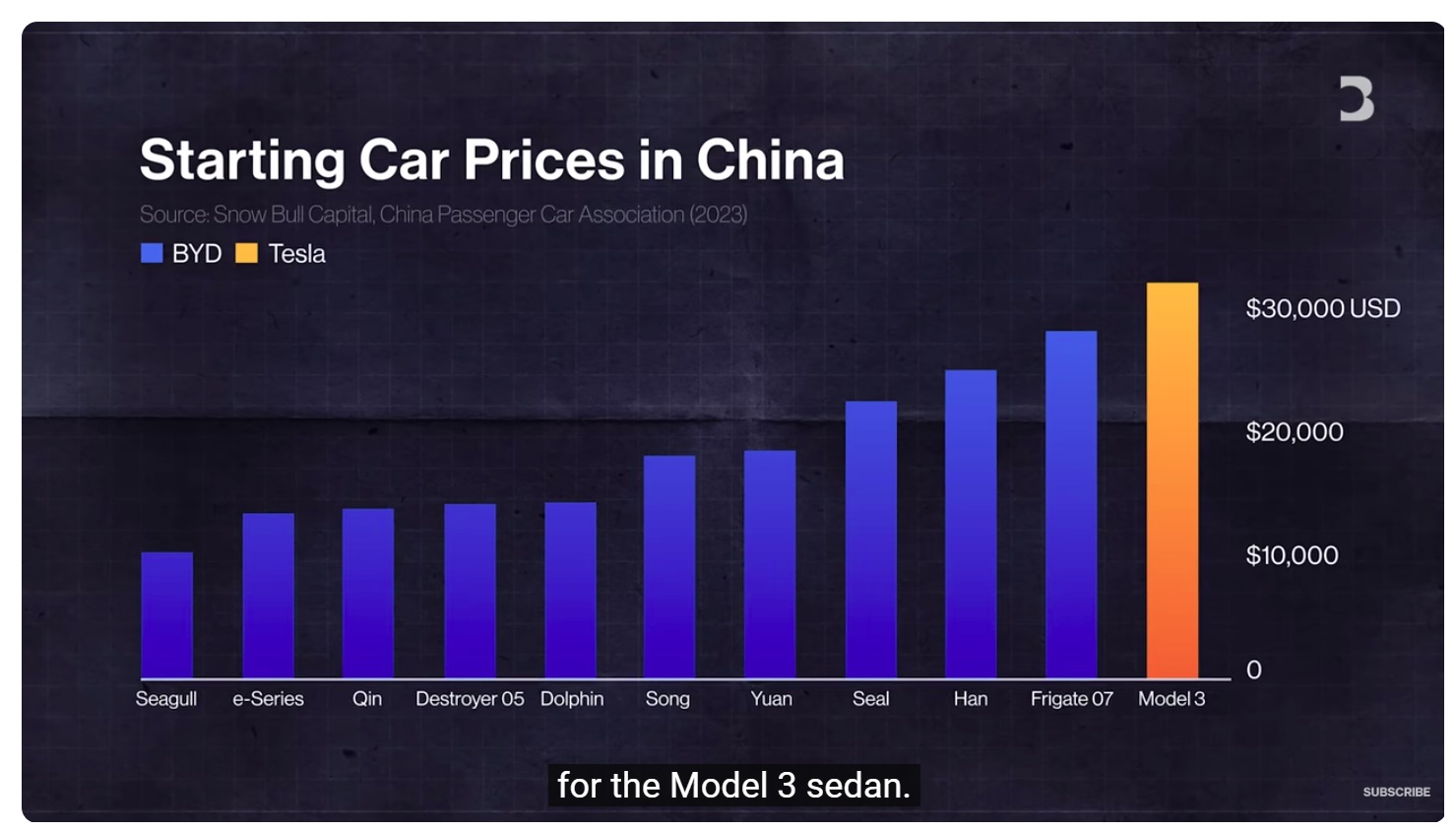
BYD has strategically targeted the mass market with more affordable electric vehicles, making EVs accessible to a broader segment of the Chinese population. Tesla, while initially catering to the premium segment, has also made efforts to introduce more budget-friendly models like the Model 3 to tap into the growing demand for affordable electric transportation in China.
Charging Infrastructure:
Tesla has invested significantly in its Supercharger network, providing fast and convenient charging options for Tesla vehicle owners. BYD has been working on expanding its charging infrastructure as well, aiming to address the range anxiety concerns of potential EV buyers.
Policy Landscape:
China’s supportive policies for the electric vehicle industry, such as subsidies and incentives, have played a crucial role in the success of both BYD and Tesla. Continued government backing and the push for greener transportation solutions further intensify the competition in the Chinese EV market.
Business Strategy:
Elon Musk hypothesised that for EVs to scale, Tesla needs to start from the higher end model to win the customers trust, while BYD went for the mass market and won the heart of the masses. It’s an ongoing war, but from market data BYD is leading the race eventhough it;s too early to judge.
There are about 1.474 billion vehicles on Earth as at 2023, with roughly 19% of those vehicles are in the United States. Eventhough the world wide projected sales is at 14 million electric cars in 2023, it’s still very early to predict the market leader as the market is still green and things like technology advancement and government regulations can shape the future of the EV battle.
Conclusion:
The BYD vs. Tesla rivalry in the Chinese electric vehicle market reflects the broader global competition in the race towards sustainable transportation. BYD’s emphasis on a vertically integrated approach and affordable mass-market options contrasts with Tesla’s high-tech allure and premium offerings. As both companies continue to innovate and adapt to the evolving market dynamics, the outcome of this EV war will not only shape the future of the automotive industry in China but also influence the global trajectory of electric mobility.